July 20th, 2009. The 40th anniversary of the Apollo 11 moon landing. The very first time mankind walked on the Moon. From liftoff,

to walking down the lunar landing module for the first time,


On July 16th, 1969 Apollo 11 was the spacecraft that carried the first men to the moon. There were several success stories before the success of this mission in the history of trying to get spacecrafts to the moon. Prior to this mission, Apollo 8, 9 and 10 came close, but it was Apollo 11 that accomplished the once impossible dream of actually landing the first man on the moon.

 Beginning the Journey of Apollo 11
On July 16th, 1969 Neil Armstrong, commander of Apollo 11, Michael Collins, command module pilot, and Edwin " Buzz" Aldrin, the lunar module pilot, were picked up at Kennedy Space Center and loaded into a van and taken to the spacecraft for the beginning of their historic journey. At Apollo 11 they prepared for the ride of their lives with all the world watching. Liftoff occurred at 9:37 a.m. and with 7.5 million pounds of thrust from the Saturn V rocket, Apollo 11 was on its way to a dream. In just 12 minutes the astronauts were 120 miles above earth speeding at 17,400 mph. The mission of was to last four days with a landing on the moon.

 One Step Away From the Dream
The module "Eagle" separated from Apollo 11 and started to touch down, but the initial landing site was a crater with boulders. Armstrong saw this and maneuvered the Eagle around to a smooth landing in a suitable spot. This caused a bit of concern to the crew of Apollo 11 and the people of NASA who were waiting on the ground because fuel was running really low. Armstrong did land in a suitable spot not far away from the original place, hence the saying "the Eagle has landed." where a loud cheer erupted from the control tower and Collins, who was waiting in Apollo 11.
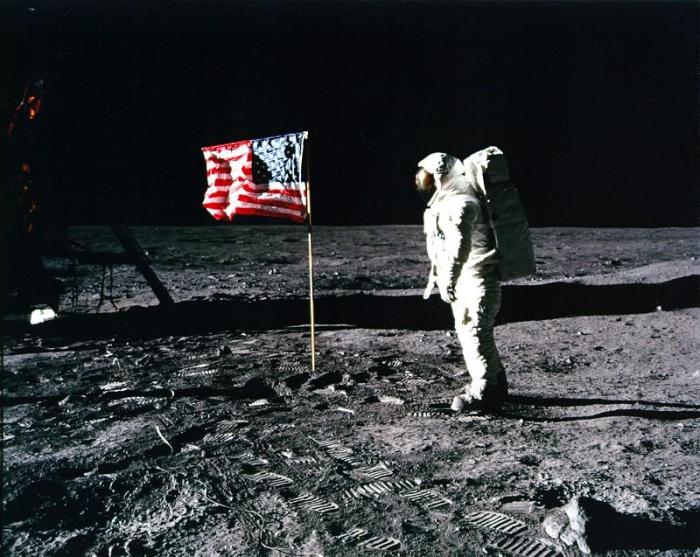

 Apollo 11 - The Final Reality
When the landing was complete, the astronauts made sure everything was in place for lift off back to Apollo 11 before they went onto the moon. When they had readied themselves, Neil Armstrong went first releasing the ladder that would take him to the bottom and to the final step of putting a man on the moon. After 21.5 hours on the moon they reconnected with the spacecraft and returned safely to earth on July 24th. This would not be the last time that this trip would be made, but no matter how many trips that were to come it would never compare to the first step made on the moon. Apollo 11 will be remembered forever in the pages of history.


The
Apollo 11 crew consisted of (from left to right) the mission commander (and first man on the Moon) Neil Armstrong, command module pilot Michael Collins, and lunar module pilot, Edwin (Buzz) Aldrin Jr.